For performance car owners and car tuners, the pursuit of automotive excellence is a journey driven by precision. Enthusiasts invest heavily in aerodynamics, high-horsepower powertrain upgrades, high-performance exhaust networks, and custom audio systems. Every single modification is meticulously planned to ensure that the vehicle operates at its absolute peak, whether navigating tight canyon roads, competing in amateur weekend track days, or cruising through weekend car meets. However, while thousands of dollars are spent perfecting the suspension geometry and engine maps, a tiny, overlooked detail often disrupts both the driving experience and the vehicle's pristine look: the factory-issued license plate frame.
Traditional license plate frames are treated as a generic afterthought by dealerships and casual drivers. But on a performance build or a track-ready sports car, an inadequate, standard-backed frame can create unnecessary drag, produce highly irritating vibrations, and slowly damage the vehicle's exterior aesthetics. This is why a heavy-duty, snug-fit silicone license plate frame has quietly become a trending upgrade within the performance car community. In this article, we will examine how different frame materials serve various automotive builds, explore the physical challenges of high-speed driving, and break down why a flexible silicone sleeve is highly suited for high-performance driving environments.
Navigating Aesthetics and Dynamics for Modified Vehicles
In the diverse world of car customization, choosing the right exterior accessory is a delicate balance between visual art and practical physics. Every automotive material serves a specific aesthetic and operational purpose, meaning there is no universally correct option, but rather the right tool for the right build.
1. The Decorative Appeal of Finished Metals and Plastics
For many custom car projects, traditional rigid frames are exceptionally effective and highly valued. Lightweight engineering plastics like PC, PP, and ABS offer cost-efficiency, incredible weight savings, and crisp factory-clean lines that look great on daily city commuters. Meanwhile, premium metal frames crafted from zinc alloy, aluminum, or stainless steel are the undisputed champions of pure visual customization.
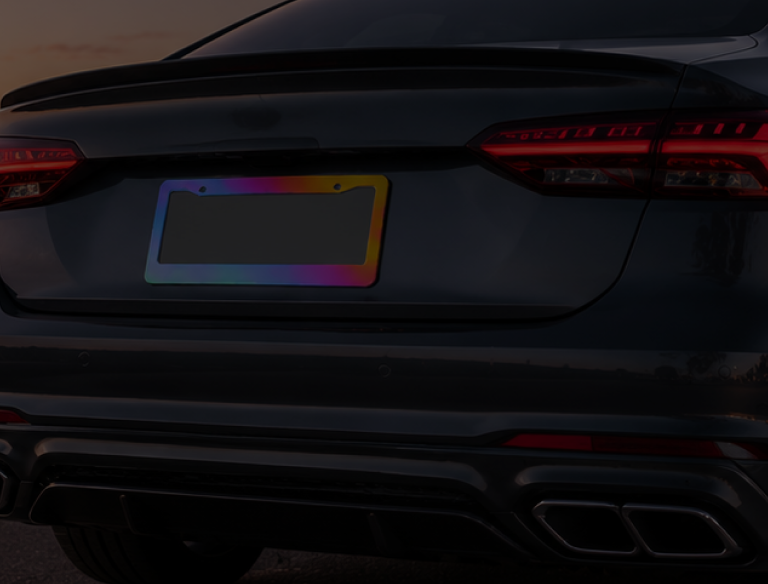
For JDM (Japanese Domestic Market) builds, Euro-style luxury tuners, or classic American muscle cars, specialized finishes like water-transfer printing (which perfectly mimics a premium carbon-fiber weave) or striking burnt-blue titanium coatings are completely irreplaceable. These custom metals and advanced finishes serve as essential automotive jewelry, providing a level of sharp contrast, aggressive racing styling, and individual expression that elevates a car's character at any local show.
2. The Kinetic Challenges of Track Days and Spirited Driving
However, when a vehicle transitions from a stationary car meet to a dynamic track environment, the surrounding physical forces change dramatically. High-performance driving introduces continuous high-frequency chassis vibrations, fierce wind resistance, and extreme engine-exhaust resonance that standard highway driving never replicates. On a smooth city street, a traditional flat-backed frame rests quietly against the trunk or rear bumper.
But down a high-speed straightaway or during hard cornering, wind traps can form in the tiny micro-gaps behind rigid, flat frames, causing them to flap or flutter against the car body. Furthermore, while rigid metal or plastic frames offer outstanding vertical strength, they lack elasticity. When subjected to the immense, localized physical stress of tracking a car or traveling over harsh road surfaces at speed, non-flexible accessories must withstand heavy kinetic loads that test the tightest mounting screws.
3. Why Flexibility Complements Pure Performance
This is exactly why drivers who prioritize track dynamics and daily cabin comfort often seek out flexible elastomeric materials for their performance setups. A frame made from high-grade industrial silicone relies on inherent elasticity rather than brute stiffness. By absorbing kinetic energy instead of resisting it, a flexible sleeve completely dampens the constant resonance generated by high-revving engines and stiff track-tuned suspensions.
This mechanical behavior cushions the moving parts of the assembly, providing specialized structural stability that matches the aggressive nature of high-performance vehicles without replacing the undeniable aesthetic and custom value that classic metal and plastic frames bring to styling-focused builds.
The Performance Advantages of Snug-Fit Silicone Frames
A premium silicone frame introduces several engineering advantages that directly address the mechanical demands of fast, spirited driving.
1. Snug-Fit Sleeve Design and Aerodynamic Stability
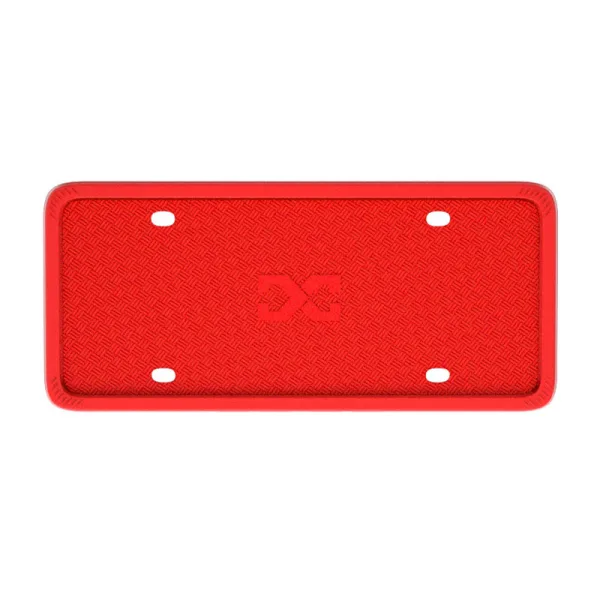
Unlike traditional two-piece or open-face frames that leave room for a metal license plate to slide or rattle within a hard channel, a quality silicone frame is molded as a single-piece flexible sleeve. The elastic borders stretch completely around the license plate, sealing it tightly within a protective wrap.
This tight seal eliminates any internal play or micro-gaps. At speeds exceeding 100 mph on track straightaways, air cannot flow behind the plate to create a pocket of high-pressure drag. The snug-fit architecture ensures the license plate remains perfectly flush against the car's bodywork, preventing high-speed aerodynamic fluttering and maintaining a clean profile.
2. Dampening Extreme Exhaust and Subwoofer Rattle
One of the most persistent annoyances for sports car owners is license plate rattle. High-performance aftermarket exhaust systems, aggressive exhaust notes, and high-power subwoofer audio upgrades generate massive sound pressure waves. These waves cause the thin, metallic license plate to vibrate violently against the vehicle's rear bumper, producing a loud, metallic buzzing noise that sounds cheap and compromises the interior cabin environment.
Silicone is an exceptional natural dampener. By wrapping the entire perimeter of the plate in a dense, soft elastomer, it absorbs the low-frequency acoustic vibrations from deep bass and rumbling exhausts. It neutralizes the vibration energy completely, ensuring 100% rattle-free performance even under the heaviest bass or loudest acceleration.
3. Scratch-Free Paint Protection Under High G-Forces
When taking sharp corners at high speeds, vehicles experience intense lateral G-forces that cause minor chassis flexing. If a license plate frame is rigid, this subtle shifting can cause the hard metal or plastic edges to rub against the vehicle's clear coat. Over time, this constant friction dulls the paint and creates deep scratches on the rear bumper.
Silicone's soft, non-abrasive texture serves as a protective cushion. No matter how aggressively you corner or slide on a track, the pliable material will never scratch, chip, or rub away your car's expensive factory paint job, keeping the bodywork immaculate beneath the plate assembly.
A Flawless Finish for High-Performance Builds
In the world of professional car tuning, true craftsmanship is defined by the absence of flaws. When building a high-performance machine, even the most expensive modifications lose their appeal if an overlooked detail like a shaking license plate creates distracting vibrations or mars the vehicle’s clean lines. Choosing the right accessory is about harmonizing your car's physical dynamics with its outward appearance.
Don't let a cheap $5 plastic frame ruin your $50,000 sports car or modified build after a day on the track. Upgrading to a durable, track-ready silicone frame is the ultimate finishing touch for any serious build. By neutralizing structural resonance and wrapping your plate in a clean, stealthy profile, it ensures that your car looks, sounds, and performs exactly as its engineers intended—allowing you to drop the lap times and focus entirely on the apex ahead.