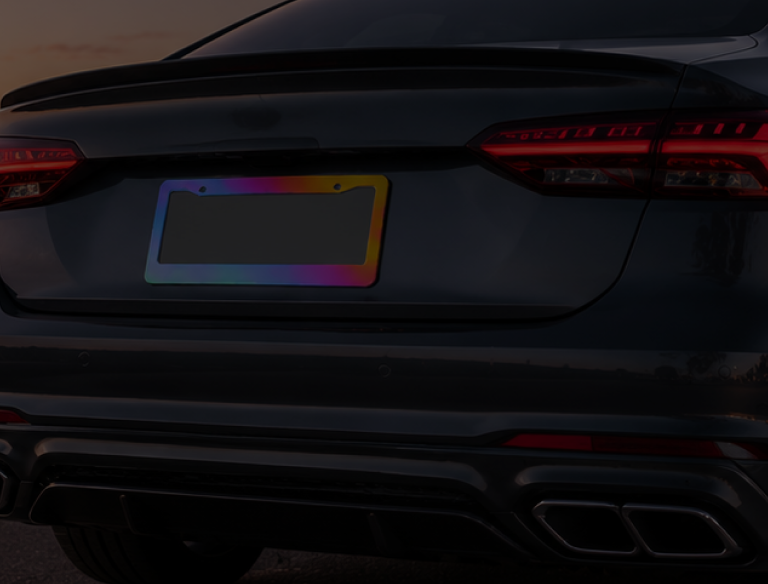
When upgrading your vehicle’s exterior hardware to replace dealership plastic frames, the decision for a metal upgrade usually comes down to two options: stainless steel and aluminum.
Both materials are resistant to standard corrosion, but they handle chemical and environmental stress differently. For vehicles driven in coastal regions with high salt air, northern areas with heavy winter road treatment, or gravel roads, choosing the wrong metal can lead to galvanic corrosion, surface staining, or damage to the vehicle's paint.
This guide breaks down the chemical and physical differences between stainless steel and aluminum license plate frames to help you select the appropriate material for your vehicle's environment.
The Chemistry of Metal Corrosion on Vehicles
To make an informed choice, it is necessary to understand how these metals interact with environmental elements. Rust specifically refers to the oxidation of iron. Because aluminum contains no iron, it cannot rust in the traditional sense. Stainless steel is an iron alloy, but it is formulated with chromium to resist oxidation.
However, both metals remain subject to distinct forms of degradation when exposed to harsh automotive environments.
Surface Properties of Aluminum
When aluminum is exposed to oxygen, it naturally forms a microscopic layer of aluminum oxide across its surface. This thin layer seals the underlying metal from further water and oxygen exposure.
However, this natural defense is vulnerable to chlorides. The chemical salts used on winter roads (such as magnesium chloride) and the salt mist found in coastal environments break down this oxide shield. Once the shield is compromised, aluminum undergoes "pitting corrosion," which appears as white, powdery spots and gradually degrades the structural integrity of the frame.
Surface Properties of Stainless Steel
Stainless steel operates on a similar chemical principle but offers higher material density. High-grade stainless steel contains a specific percentage of chromium. When exposed to oxygen, the chromium forms an invisible, stable film of chromium oxide.
If a road pebble scratches a stainless steel frame, the exposed chromium reacts with the air to reform this protective shield. However, the quality depends heavily on the specific alloy. Low-tier stainless steel alloys contain higher carbon and lower chromium levels, meaning they can still develop brown rust stains when continuously exposed to winter road brine.
304-Grade Stainless Steel vs. 6061-T6 Anodized Aluminum
Evaluating the specific grades of these metals explains how they perform under everyday driving hazards.
Technical Analysis: 304-Grade Stainless Steel
In the automotive aftermarket, 304-grade stainless steel is a standard alloy used for exterior trim. It contains notable levels of chromium and nickel, providing high resistance to chemical brines, acid rain, and environmental salts.
- Characteristics: It provides a heavy feel and is available in polished, chrome-like, or brushed finishes that match factory vehicle trims. Because of its high tensile strength, it resists bending from automated car wash brushes and road debris. High-quality 304 stainless steel can withstand multiple winter seasons without showing signs of surface oxidation.
- Vulnerabilities: It is significantly heavier than aluminum. Because it is a rigid metal, if it is installed without backing insulation or rubber dampeners, its hard edges can vibrate against the vehicle's tailgate. This friction can wear through the vehicle's clear coat and paint, leading to rust on the vehicle's underlying steel body.
Technical Analysis: 6061-T6 Anodized Aluminum
- Because raw aluminum is too soft for exterior automotive applications, manufacturers use alloyed 6061-T6 aluminum. To ensure durability on the road, the metal undergoes a chemical process called anodization. This process uses an electrical bath to artificially thicken the metal’s natural oxide layer, turning it into a hard, integrated finish.
- Characteristics: Anodized aluminum is lightweight—approximately one-third the weight of stainless steel—making it practical for vehicles where weight management is a priority, such as electric vehicles (EVs). The anodization process allows the metal to feature various permanent matte finishes (such as matte black, gray, or satin silver) that do not peel or flake off like standard paint.
- Vulnerabilities: While durable, anodized coatings can fade or chalk over extended periods of intense UV sun exposure. Aluminum is softer than stainless steel, meaning an impact from a highway rock can scratch through the anodized layer. This exposes the raw aluminum beneath, creating a risk for white pitting corrosion if road salt becomes trapped in the scratch.
Metal Performance Matrix
| Performance Category | 304 Stainless Steel Frame | Anodized 6061-T6 Aluminum Frame |
|---|---|---|
| Salt & Chemical Resistance | High (Resists road brines without surface pitting) | Moderate (Requires anodized coating to prevent salt pitting) |
| Structural Strength | Rigid (Resists bending and impact dents) | Moderate (Lightweight but susceptible to sharp stone dents) |
| Weight Profile | Heavy (Dense metallic structure) | Lightweight (Suitable for electric vehicles and sports cars) |
| Aesthetic Finishes | Polished mirror, chrome-style, or brushed steel | Matte, satin, and colored anodized options |
| UV Sun Resistance | High (Maintains finish under direct sunlight) | Moderate (Anodized colors may fade slightly over multiple years) |
| Paint Wear Risk | High vibration scratch risk (Requires rubber dampeners) | Moderate scratch risk (Requires backing pads to prevent friction) |
Preventing Galvanic Corrosion During Installation
Regardless of whether you choose stainless steel or aluminum, it is essential to mitigate an environmental reaction known as galvanic corrosion.
Galvanic corrosion occurs when two dissimilar metals make direct physical contact in the presence of an electrical conductor, such as salty water or wet road grime. Your vehicle’s body panels are made of steel, the mounting screws are often zinc-plated iron, and the new frame is stainless steel or aluminum. When salt water pools behind the license plate, it creates an electrochemical reaction that accelerates the corrosion of the weaker metal, leading to rust on your trunk or tailgate.
How to Isolate and Secure a Metal Frame
To use a metal frame safely without creating a rust hazard on your paint, follow these standard installation steps:
- Use a Silicone Sleeve Insert: One option is to insert your license plate into a slim silicone license plate frame before mounting the decorative metal frame over it. The silicone serves as a non-conductive, waterproof barrier, completely breaking the physical contact between the vehicle's paint, the license plate, and the outer metal trim.
- Install Rubber Spacers: If a silicone insert is not used, place rubber or foam washers over the vehicle’s mounting holes before tightening the screws. This keeps the metal frame slightly raised off the vehicle's paint, allowing trapped moisture and salt water to drain out rather than pooling against the bodywork.
- Use Stainless Steel Hardware: Avoid using standard factory iron or zinc screws to mount a metal frame. Instead, install matching 304 stainless steel mounting screws and matching screw covers. This prevents the hardware from seizing, rusting, or bleeding orange oxidation streaks down the face of the frame.
By assessing your local climate, selecting the appropriate metal weight and finish for your vehicle, and isolating the mounting points, a quality metal frame can provide a durable, long-term exterior upgrade.