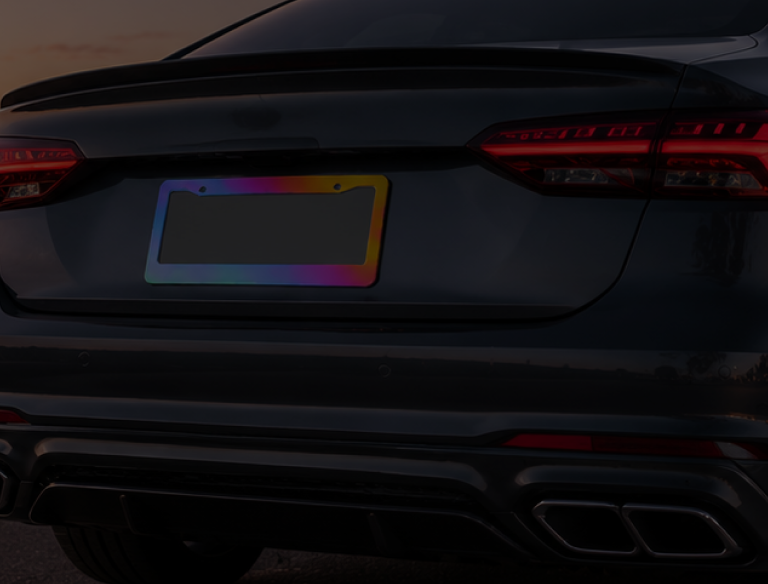
When upgrading a vehicle's exterior trim, many automotive enthusiasts harbor a strong prejudice against plastic license plate frames. In the marketplace, standard plastics are often stigmatized as cheap, flimsy, and prone to snapping during cold winters or fading into an ugly gray under the summer sun. However, in the professional automotive manufacturing sector, this stereotype only applies to low-grade, indoor-use recycled plastics. The reality of high-end automotive hardware relies on a highly sophisticated engineering discipline: High-Pressure Precision Injection Molding.
Plastic injection molding is an advanced manufacturing science where raw polymer resins are heated to a molten state and forced under immense hydraulic pressure into a highly calibrated, water-cooled steel mold. In our production facility, we utilize fully automated, digitally controlled injection molding machinery to master four of the industry’s most strategic resins: ABS, PP, PC, and PS.
By aligning the unique chemical profiles of these polymers with advanced manufacturing parameters, we transform raw resin pellets into durable, pristine, and perfectly flush-fitting license plate frames. For our global brand owners and wholesale partners, our injection-molded collections represent the perfect harmony of cost efficiency, outdoor weatherproofing, and engineered longevity.
The Injection Molding Process: Engineering the Outdoor Defense
To guarantee that our polymer frames can withstand the merciless environment of the open road, our manufacturing sequence incorporates automated quality controls from material sourcing to final ejection:
Integrated Anti-UV Molecular Defense
The primary enemy of outdoor polymers is solar ultraviolet (UV) radiation, which triggers photo-oxidation, causing unprotected plastics to yellow, turn brittle, and chalk within months. To combat this, we strictly source premium automotive-grade and outdoor-grade resins that are pre-integrated with advanced UV stabilizers and light blockers during the initial compounding stage. This built-in molecular defense ensures that all four of our resins (ABS, PP, PC, and PS) can endure 3 to 5 years of intense, direct sunlight exposure without fading, powdering, or losing structural elasticity.
High-Pressure Melt and Injection Cycle
Raw polymer pellets are fed into a heated reciprocating screw barrel, where they are progressively melted at tightly monitored plasticizing temperatures tailored to each material. Once molten, the injection molding machine utilizes hundreds of tons of clamping force to securely lock the two halves of our precision steel molds. The screw then fires forward like a hydraulic piston, forcing the liquid polymer into the mold cavity at immense velocity, ensuring the material packs tightly to form a 100% solid, void-free core.
Uniform Cooling and Monolithic Ejection
Internal computerized cooling channels inside our steel molds rapidly circulate water to absorb thermal energy uniformly. This uniform cooling is vital; if one section of the frame cools faster than another, internal stresses will cause the plastic to warp or twist upon exit. Once the optimal ejection temperature is reached, the mold opens, and automated mechanical ejector pins cleanly push out a perfectly flat, monolithic license plate frame.
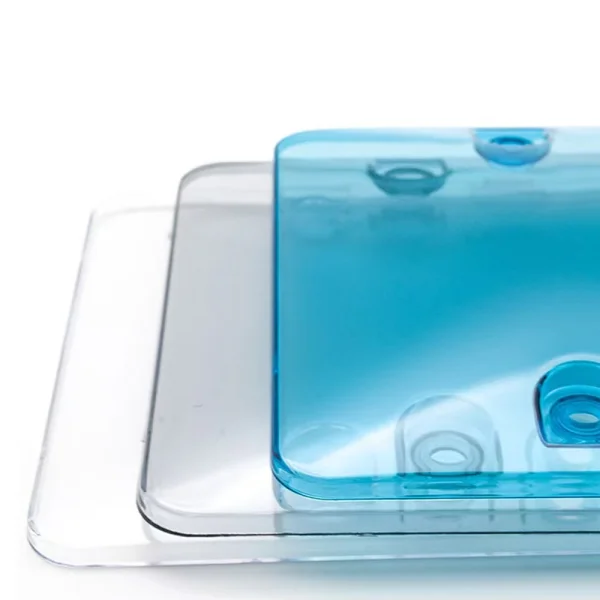
Material Science: Decoding Our Automotive-Grade Resins
A premium frame requires strategic material application. No single plastic polymer fits every driving environment. We carefully select and process our four core resins to cater to specific vehicular demands and budgetary parameters:
ABS (Acrylonitrile Butadiene Styrene): Balanced Rigidity and Pristine Surfaces
ABS is a premium engineering thermoplastic highly celebrated across the automotive industry for its exceptional balance of physical properties. It possesses a high tensile strength and great surface hardness, resulting in a frame that is incredibly rigid and structurally solid.
• The Advantage: When injected under high pressure, our automotive-grade ABS perfectly replicates the micro-fine smoothness of our steel molds. The finished frame exits the machinery with an immaculate, flat, and ultra-smooth surface, free from knit lines or sink marks. It provides a crisp, high-end mechanical feel that mimics the structural presence of metal while remaining highly cost-effective.
PP (Polypropylene): Extreme Flexibility and Fatigue Resistance
PP is the undisputed champion of flexibility in the polymer family. It is a lightweight, low-density material widely recognized for its incredible "fatigue resistance" and impact endurance.
• The Advantage: Often referred to in manufacturing as a "living hinge" plastic, our molded PP frames can be bent, twisted, and flexed to extreme angles without suffering from stress whitening or fracturing. This incredible flexibility makes PP frames the perfect choice for everyday commuters who encounter rough gravel roads, frequent automatic car washes, or need to bend the frame slightly to conform to contoured curved bumpers. Even in sub-zero winter environments, a PP frame retains its rubbery toughness and refuses to crack.
PC (Polycarbonate): Armor-Grade Hardness and Thermal Shielding
Polycarbonate is an ultra-premium, high-performance engineering macromolecule used in applications that demand absolute, extreme physical protection, such as automotive headlights and bulletproof shielding.
• The Advantage: Our PC license plate frames offer a level of dimensional hardness and impact threshold that towers over standard plastics. Polycarbonate exhibits a massive operational temperature range, maintaining its rigid physical state under blistering tropical heatwaves up to 135°C (275°F) without warping or sagging. It offers a near-indestructible physical shield against flying highway debris, stones, and corrosive road-deicing salts.
PS (Polystyrene): High Flexural Stiffness and Precision Dimensions
Polystyrene is a highly economical, lightweight resin chosen for its excellent dimensional stability and low material moisture-absorption rates. It shrinks very little during the mold cooling stage, allowing for highly predictable manufacturing geometry.
• The Advantage: PS delivers an exceptionally high level of flexural stiffness, allowing us to mold frames with sharp, straight, and aggressively masculine geometric borders. Because it is highly rigid, PS is inherently brittle when subjected to major external bending or twisting forces. Therefore, we strategically engineer our PS frames for fixed-bumping applications where frequent removal or deformation is not required. By acknowledging this physical profile, we provide a highly rigid, flawlessly aligned, and exceptionally cost-effective frame option, reminding users to avoid over-flexing the piece during installation.
Advanced Machinery & Tooling: The Zero-Flash Standard
A telltale sign of a cheap plastic frame is "flash"—rough, razor-sharp plastic excess leaking along the parting line where the mold splits, which can scratch car paint or cut hands during unboxing. We eliminate this through precise tool maintenance: our advanced clamping mechanisms and micron-level mold tolerances ensure that the parting lines seal with absolute perfection under pressure. Our finished frames exit the machinery with beautifully smooth, rounded borders (Zero-Flash Guarantee), completely safe to handle with bare hands and ready for instant bumper installation.
Quality Control: The Rigorous Structural Audit
Before any batch of injection-molded polymer frames is approved for warehousing and shipping, samples undergo strict physical testing:
- The Flex & Torsion Recovery Audit: For our flexible lineages like PP and ABS, frames are mechanically twisted to evaluate their elastic memory. The frames must instantly snap back to their engineered flat shape with zero structural deformation.
- Dimensional Bolt-Hole Alignment: Every molded frame is tested on a master vehicle layout jig. The screw holes must line up with 100% precision to guarantee a hassle-free, tool-friendly DIY installation for the end consumer.
Plastic automotive accessories do not have to mean low quality. By pairing the targeted advantages of ABS, PP, PC, and PS resins with automated high-pressure injection molding and built-in UV stabilization, we manufacture license plate frames that rewrite the standards of polymer longevity. When you choose our injection-molded frames, you are investing in a lightweight, weatherproof, and precision-tailored automotive component built to protect your plate for years to come.