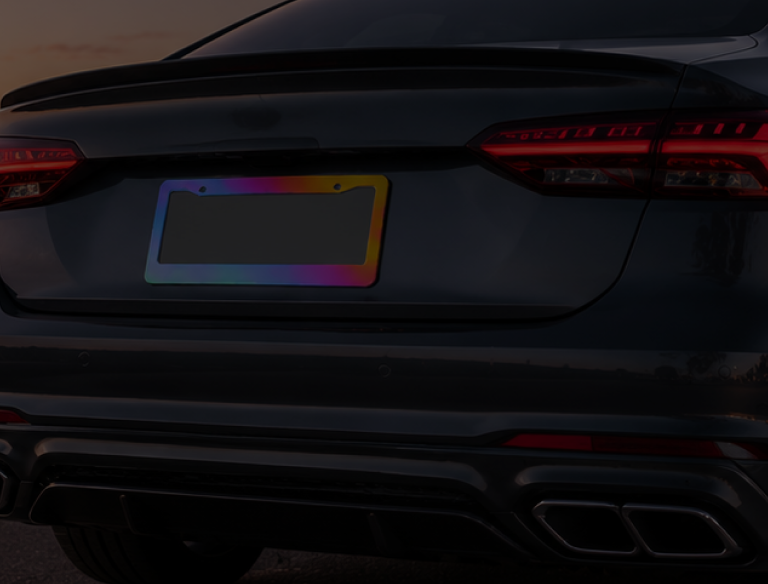
In the automotive accessories market, a burnt blue finish—also known as a titanium burned or neo-chrome finish—is a specialized surface treatment characterized by a distinct blue, purple, and gold gradient color scheme.
This visual style originated in the high-performance racing sector, where titanium exhaust pipes naturally changed colors when subjected to intense engine heat. Today, this look has transitioned into a highly sought-after aesthetic for exterior automotive styling hardware, particularly license plate frames. For retail buyers and individual consumers, understanding how this color gradient is applied to non-titanium metals is essential for evaluating product lifespans and making informed purchasing decisions.
Materials Science: Why Zinc Alloy and Stainless Steel are Ideal Substrates
While the burned look natively belongs to solid titanium, modern manufacturing allows this finish to be precisely applied to more cost-effective and structurally adaptive metals. Stainless steel and zinc alloy serve as the two primary substrates for high-quality burnt blue license plate frames.
Application on Stainless Steel
Stainless steel is selected for its high tensile strength, structural rigidity, and dense weight profile. When a burnt blue finish is applied to a stainless steel core, the frame retains all its heavy-duty mechanical advantages. It resists bending, maintains its shape under structural pressure, and easily withstands the high-speed impacts of road gravel and highway debris without cracking.
Application on Zinc Alloy
Zinc alloy excels in complex engineering molds due to its excellent fluidity during the die-casting process. This metal allows manufacturers to produce license plate frames with complex 3D texturing, structural embossing, and ultra-sleek, narrow-border (slimline) profiles. Applying a burnt blue treatment to zinc alloy ensures that even the most intricate structural shapes are covered in an even, continuous gradient color.
Engineering Breakdown: How the Burnt Blue Finish is Achieved
Achieving a true metal-based gradient color on stainless steel and zinc alloy requires distinct engineering approaches. There are two primary methods used in professional manufacturing environments.
Physical Vapor Deposition (PVD) Vacuum Coating
PVD coating is the modern industrial standard for applying a burnt blue finish to both zinc alloy and stainless steel. The process takes place inside a high-vacuum chamber. High-purity solid titanium metal is vaporized using an electric arc. A negative electrical charge is applied to the license plate frames, drawing the vaporized metal ions directly to the substrate.
By precisely regulating the deposition time down to the millisecond, technicians control the microscopic thickness of the titanium layer. The rainbow gradient effect is achieved through light refraction across varying nanometer-scale thicknesses of the metal film, ensuring an incredibly uniform color consistency across large production runs.
Thermal Treatment Simulation
Thermal treatment is a mechanical heating method used exclusively on stainless steel substrates. The steel frames are placed into a high-temperature kiln under precise temperature controls. As the steel heats up, it naturally reacts with oxygen, creating a thin iron-chromium oxide layer on its surface.
As the thickness of this oxide layer changes with rising temperatures, it reflects light differently, shifting from straw yellow to dark purple and finally to deep blue. This method produces a very natural, industrial gradient look, but it requires highly experienced operators to maintain color consistency across a batch.
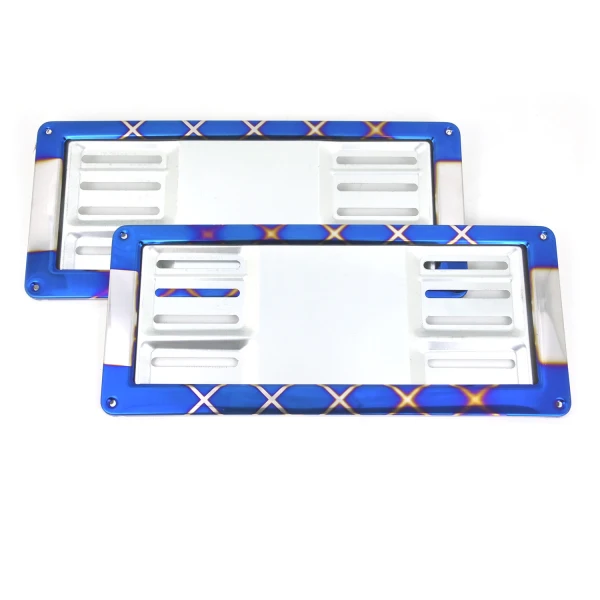
Key Performance Features of Burnt Blue License Plate Frames
Professional-grade burnt blue finishes provide several critical physical protections that directly impact the durability of the underlying metal hardware.
• Permanent Surface Bonding: Unlike liquid automotive paints that sit loosely on top of a substrate, both PVD coatings and thermal oxide layers bond directly with the metal surface at an atomic level. There is no separate film boundary to fail, ensuring that the finish will not peel, flake, or lift under high-pressure commercial car washes.
• High Scratch and Wear Resistance: The titanium compounds deposited during the PVD process have a very high mechanical hardness. This creates an abrasion-resistant outer shell that protects the softer underlying metals from being scratched by screwdrivers during installation or by abrasive road grit during daily travel.
• Corrosion and Salt Shield: License plate frames are positioned at the extreme front and rear exterior boundaries of a vehicle, making them vulnerable to environmental moisture, road salt (sodium chloride), and coastal salt fog. A properly executed PVD barrier completely seals the zinc alloy or stainless steel core away from these aggressive chemical agents, preventing oxidation and rust formation.
Practical Buying Advice: PVD Burnt Blue vs. Cheap Painted Counterfeits
When sourcing burnt blue license plate frames online, buyers must look past simple promotional photos. The market contains a high volume of low-quality imitations that degrade rapidly.
The Appearance Difference
True industrial PVD burnt blue or thermally treated finishes rely on the physical laws of light interference. This creates a distinct visual phenomenon known as the flip-flop effect. When you change your viewing angle or alter the direction of the light source, the blue, purple, and gold colors seamlessly blend and shift across the frame's contours.
In stark contrast, low-end counterfeit frames are manufactured by simply spraying a cheap, translucent blue and purple tinted lacquer over standard polished metal. These painted imitations lack depth, look completely static under changing light angles, and have sharp, unblended lines between the colors.
Durability Failures of Paint
Beyond poor aesthetics, painted imitations carry severe functional defects. Liquid clear coats have weak surface adhesion to polished stainless steel and zinc alloy. Within one to two years of real-world exposure, the combined forces of thermal contraction, moisture ingress, and minor gravel impacts will cause the blue paint to blister, crack, and peel off in large flakes, leaving the bare metal unprotected and unsightly. Investing in a true atomic-bonded PVD finish eliminates this maintenance cycle entirely.
Material Guide for Buyers
Selecting the right burnt blue license plate frame depends heavily on your specific market requirements and design preferences.
• Choose Zinc Alloy Burnt Blue Frames if your application requires intricate 3D logos, custom engraved text, ultra-slim modern borders, or the most competitive pricing for high-volume retail distribution.
• Choose Stainless Steel Burnt Blue Frames if your application demands ultimate structural weight, maximum impact resistance against heavy road debris, and a rugged, industrial heavy-duty product profile.
Both materials, when paired with high-precision vacuum PVD processing, offer a highly durable and visually striking product that performs reliably in any environmental condition.