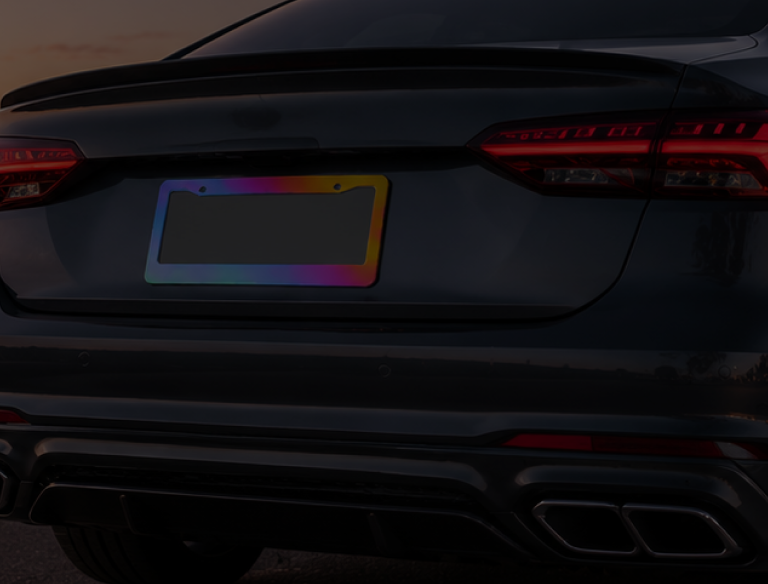
Every car enthusiast and automotive retailer knows that the devil is in the details. You can wash, wax, and ceramic-coat your vehicle to perfection, but a single rusted, peeling, or faded license plate frame can instantly ruin the entire aesthetic. While many standard license plate frames on the market look great on day one, they often degrade quickly after exposure to harsh road environments. The secret to preventing this premature wear lies in selecting premium metal substrates combined with advanced engineering surface treatments.
For those who appreciate a high-end, stealthy, and modern automotive appearance, the combination of mechanical sandblasting and electrochemical anodizing represents the pinnacle of surface engineering. This dual-action process is specifically tailored for high-grade aluminum alloys. Unlike traditional painting methods that simply apply a liquid layer over the metal, sandblasting and anodizing physically and chemically transform the aluminum surface. This guide breaks down the science behind this advanced finishing technique, explaining why it has become the preferred choice for premium aluminum license plate frames.
Deep Dive Into Aluminum: Why Anodizing is Exclusive to Aluminum Alloys
To appreciate the value of an anodized automotive accessory, it is essential to look closely at the materials science of aluminum itself. Aluminum alloy is highly valued across the global automotive hardware sector for its incredible strength-to-weight ratio, structural stability, and lightweight profile, making it the perfect choice for high-performance and modern electric vehicles.
However, bare or untreated aluminum naturally reacts with atmospheric oxygen over time. While it creates a microscopic natural oxide layer, this thin film is structurally weak and uneven, leaving the metal looking dull, blotchy, and vulnerable to deep atmospheric degradation when exposed to harsh highway environments.
Anodizing is a highly controlled electrochemical process that addresses this exact vulnerability. It is a treatment unique to aluminum alloys because of the way the metal responds to electricity and acid. Instead of adding a foreign substance or an external coating to the frame, anodizing forces the outer surface of the aluminum substrate to convert entirely into a hard, integrated layer of aluminum oxide. Because this protective layer grows directly out of the metal itself, it becomes an inseparable part of the license plate frame's internal crystalline structure.
Step-by-Step: The Precision Manufacturing Process of Sandblasted Anodizing
Achieving a flawless, premium finish requires a multi-stage production line executed with industrial precision. Shortcutting any part of this manufacturing sequence ruins the mechanical properties of the end product. Here is how premium aluminum license plate frames are manufactured under our professional quality control pipeline.
Step 1: Mechanical Sandblasting
The process begins before any chemical or electrical treatment occurs. Raw extruded or stamped aluminum frames often carry microscopic lines, die marks, and manufacturing blemishes. To achieve a perfectly smooth, uniform appearance, the frames are placed inside an automated sandblasting chamber.
Using highly pressurized compressed air, specialized media such as fine quartz sand or microscopic glass beads are propelled at high velocities against the aluminum surfaces. This mechanical impact micro-etches the metal, stripping away all surface imperfections and replacing them with a beautiful, satin, matte frosted texture. This distinctive velvet-like surface drastically reduces harsh glare and reflections, creating the deeply sought-after luxury matte aesthetic.
Step 2: Chemical Cleaning and Etching
Once the mechanical blasting is complete, the aluminum frames undergo deep chemical cleaning. They are immersed in specialized alkaline cleaning tanks to dissolve any lingering grease, manufacturing oils, or fingerprints.
Following this, a precision acid etching solution is used to remove the natural, unstable oxide skin that reformed after sandblasting. This critical step leaves the raw aluminum atoms completely exposed, highly active, and perfectly primed for the electro-chemical bonding phase.
Step 3: Anodizing Treatment
The prepared aluminum license plate frames are then suspended from conductive titanium racks and submerged into a precisely chilled, chemical electrolytic bath, typically containing a sulfuric acid solution. The frames are connected to the positive terminal of a high-voltage direct current power supply, acting as the anode in the circuit. Cathode plates line the interior of the tank.
As the electric current flows through the acid solution, water molecules split apart, releasing highly reactive oxygen ions. These ions migrate directly to the positive aluminum frame, combining rapidly with the surface atoms. This controlled electrochemical oxidation converts the outer layer of the aluminum into a tough, structured anodized membrane with a thickness typically ranging from 10 to 15 microns.
Step 4: Color Infiltration
The newly formed anodized layer is unique because it features a highly ordered, microscopic porous structure at the atomic level. These open micro-pores act like a dense field of microscopic cells capable of absorbing materials.
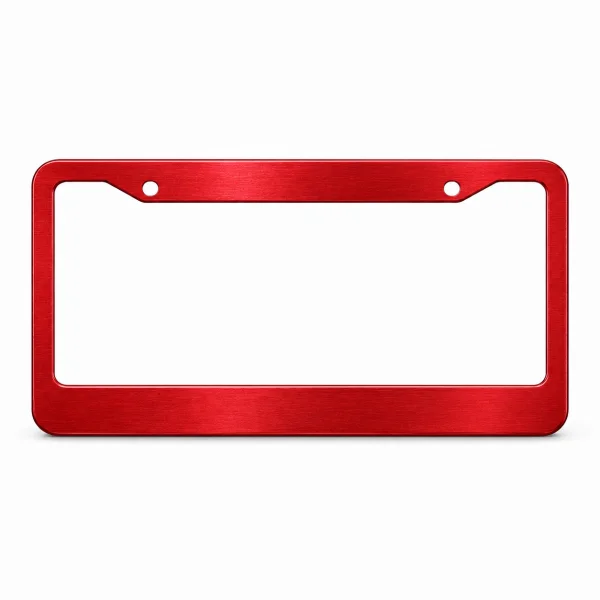
To give the license plate frames their deep, rich coloring—such as sleek matte black, gunmetal gray, or racing red—the frames are transferred into specialized coloring tanks containing premium organic or inorganic dyes. Capillary action draws the concentrated color pigments deep into the open micro-pores of the aluminum oxide layer. This allows the color to settle inside the structural walls of the metal matrix rather than sitting loosely on top of it.
Ultimate Benefits: Why Sandblasted Anodized License Plate Frames Excel
Investing in a sandblasted anodized license plate frame provides significant physical performance advantages that immediately set it apart from entry-level products.
• Zero Risk of Peeling or Flaking: Traditional wet paint and low-grade coatings are held together by surface adhesion, meaning they are prone to cracking, bubbling, or peeling off over time. Because an anodized layer is structurally grown from the aluminum core, there is no separate boundary layer to fail. Even when subjected to high-pressure commercial car washes or extreme thermal expansion and contraction, the finish cannot delaminate, peel, or flake off.
• Outstanding Scratch Resistance and Surface Hardness: The aluminum oxide layer created by anodizing is chemically identical to sapphires and rubies. It ranks incredibly high on the Mohs hardness scale. This transformation yields a surface that is exceptionally resistant to scratches, abrasions, and scuffs. When installing plates, tightening screws, or wiping down the vehicle, the frame remains completely free of the fine hairline scratches that ruin painted alternatives.
• Corrosion and Salt Shield: Driving through winter slush or parking near coastal environments exposes automotive hardware to highly corrosive road salts and maritime salt fogs. Untreated metals corrode rapidly under these conditions. The anodized barrier provides excellent chemical resistance, sealing the raw aluminum alloy away from moisture and salt ions, thereby preserving the structural integrity of the frame.
• Impact Resilience: Positioned at the leading edge and rear bumper of a vehicle, license plate frames are constantly struck by high-speed road debris, gravel, and small pebbles. Brittle paint layers chip easily upon impact, exposing raw metal. Anodized aluminum absorbs these micro-impacts seamlessly due to its integrated structure, preventing the unsightly speckled look common on older vehicles.
Partner with Engineering Excellence
In the competitive automotive accessories market, selecting the right finishing method dictates a brand's long-term reputation. The science behind sandblasted anodizing proves that it is far more than a simple color choice; it is an advanced metallurgical upgrade designed specifically to maximize the natural beauty and strength of aluminum alloys.
By utilizing precise mechanical blasting to create a flawless matte texture, followed by an electrochemical bath that locks rich coloration directly into the metal structure, we deliver license plate frames that offer an exceptional balance of modern styling and rugged physical durability.
As a specialized manufacturer dedicated to high-tier automotive hardware, we combine advanced electrical control with premium chemical engineering to supply distributors, retailers, and car enthusiasts with components built to look pristine through every journey.
Interested in expanding your retail selection with premium anodized options or placing a custom wholesale production run? Contact our technical engineering team today for material specifications and direct factory volume pricing.