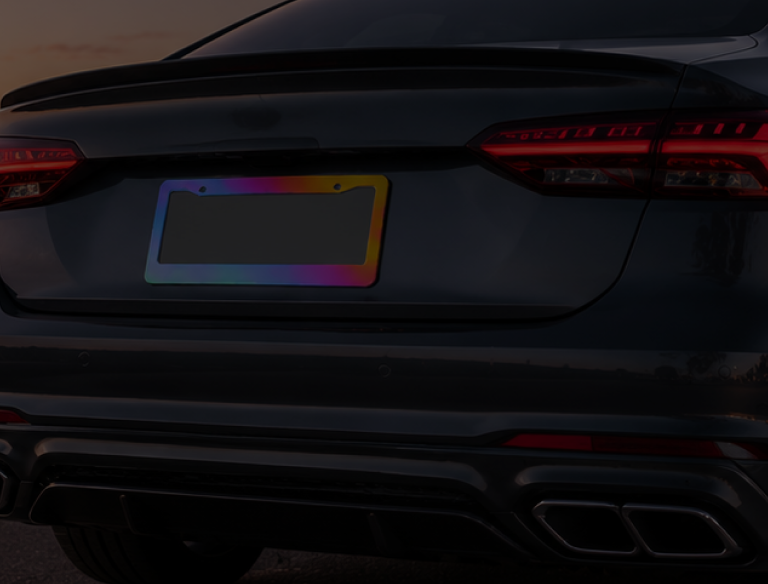
In the automotive tuning and styling industry, carbon fiber represents the ultimate racing-inspired aesthetic. However, utilizing real carbon fiber components for every exterior accessory can significantly increase production and purchasing costs. To bridge the gap between high-end styling and commercial viability, water transfer printing—commonly known as hydro-dipping—has emerged as a premier industrial solution.
Hydro-dipping is a specialized surface treatment process that utilizes water pressure to apply high-fidelity, high-definition graphics to three-dimensional objects. For license plate frames, this technique is heavily deployed to replicate the intricate woven pattern of real carbon fiber. For global importers, accessory brands, and consumers, understanding the technical execution and material performance of carbon fiber hydro-dipping is key to evaluating the value and service life of the product.
Engineering Breakdown: How the Carbon Fiber Pattern is Applied
Achieving a flawless, continuous carbon fiber texture on a license plate frame requires a multi-stage production line that balances chemistry, thermodynamics, and fluid dynamics. Unlike traditional sticker wrapping, hydro-dipping creates a full-coverage coat through a structured manufacturing sequence.
Step 1: Substrate Pretreatment and Base Coating
Before any graphics can be transferred, the raw license plate frames must undergo strict surface preparation. Metal frames are treated to remove oxidation, grease, and milling residue, while plastic frames undergo specialized chemical cleaning or surface activation to ensure reliable adhesion.
Once fully cleaned, a premium automotive-grade base coat is sprayed onto the frame. For a carbon fiber pattern, this base coat is typically a deep black or dark graphite grey. This underlying color is vital, as it provides the background shadow that gives the transferred woven pattern its visual depth.
Step 2: Film Floating and Chemical Activation
The carbon fiber graphics are printed using specialized water-soluble inks onto a polyvinyl alcohol (PVA) film. This film is precisely laid flat onto the surface of a temperature-controlled water tank. The water naturally softens the PVA backing material.
After a specific floating duration, a technician or automated system sprays a precise layer of a chemical solvent known as an activator across the film. The activator dissolves the chemical binders in the PVA film, converting the solid printed carbon fiber ink pattern into a liquid, active layer of oil-based ink floating perfectly on top of the water.
Step 3: Hydro-Dipping Infiltration
With the ink pattern fully liquefied, the license plate frame is secured to a dipping fixture. The frame is slowly pushed down into the water tank at a highly controlled speed and angle.
As the frame descends, the water's natural, uniform hydrostatic pressure forces the liquefied carbon fiber ink layer to wrap seamlessly around the frame. Because water exerts equal pressure on all surfaces, the ink flows perfectly into recessed screw counterbores, over 3D embossed borders, and around tight edge radiuses, creating a continuous coat with zero air pockets.
Step 4: Washing and Top Clear Coat Application
After immersion, the frame is removed from the tank and sent to a washing station where hot water sprays rinse away any remaining water-soluble PVA film residue. Once completely dried in a curing oven, the frame undergoes its final critical step: the application of a high-tier automotive clear coat.
This protective clear coat can be ordered in either a high-gloss finish to replicate traditional shiny carbon fiber or a satin matte finish for a modern, stealth look. The clear coat is chemically hardened to seal the transferred ink layer beneath it, serving as the primary barrier against physical wear and tear.
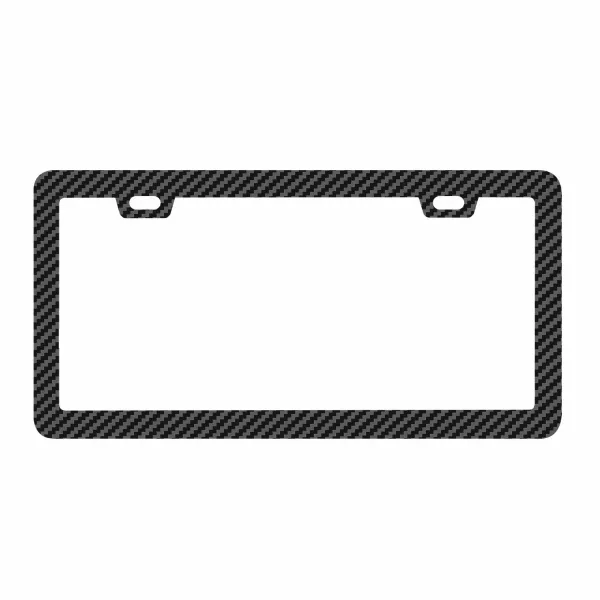
Substrate Compatibility: Metal Alloys and Automotive Plastics
One of the greatest engineering advantages of the hydro-dipping process is its extreme material versatility. At our manufacturing facility, we precisely adapt our chemical pre-treatments and bonding agents to apply the carbon fiber look across four distinct substrate materials to meet varying market demands.
Stainless Steel Substrates
Stainless steel offers unmatched tensile strength, extreme structural rigidity, and a premium heavy-duty weight profile. Applying a carbon fiber hydro-dipped coat to a stainless steel core yields a highly rugged exterior product. The underlying steel frame provides absolute resistance against heavy physical bending and distortion, making it an excellent high-end choice for trucks and SUVs that encounter demanding road conditions.
Aluminum Substrates
Aluminum alloy is highly prized for its lightweight engineering characteristics and its natural resistance to deep structural oxidation. Combining an aluminum frame with a carbon fiber hydro-dipped finish satisfies sports car enthusiasts who prioritize reducing vehicle weight while demanding a premium metal texture. The finish completely seals the aluminum, ensuring the underlying alloy never comes into raw contact with environmental moisture.
ABS Plastic Substrates
Acrylonitrile Butadiene Styrene (ABS) is a rigid, impact-resistant engineered thermoplastic widely used for factory automotive grilles and trim pieces. Because ABS plastic possesses a naturally smooth, non-porous, and perfectly flat surface profile, it serves as an exceptional substrate for hydro-dipping. The liquid carbon fiber ink settles onto ABS with maximum geometric accuracy, yielding the sharpest, highest-clarity woven visual definition in the industry.
PP Plastic Substrates
Polypropylene (PP) is a highly flexible, resilient thermoplastic known for its superior elasticity and fatigue resistance. Unlike stiffer materials, a PP plastic license plate frame can bend significantly under pressure without snapping or cracking, and it is entirely immune to rust. Utilizing a PP substrate allows for the production of highly durable, cost-effective carbon fiber frames that perform reliably on daily commuter vehicles.
Key Performance Features of Hydro-Dipped License Plate Frames
Professional-grade carbon fiber hydro-dipping provides specific technical and functional advantages over low-grade vinyl decals or basic painted alternatives.
• High-Fidelity Visual Depth: Because the active ink wraps directly onto a color-matched base coat, the finished frame captures the multi-layered visual illusion of genuine woven composite materials, reflecting light naturally across its contours.
• 360-Degree Seamless Wrapping: Traditional adhesive vinyl wraps or stickers frequently peel or lift at sharp corners and edges due to weather-induced thermal expansion. Because hydro-dipping relies on water pressure to lock the graphic onto the metal or plastic, the pattern creates a continuous, unbroken, and seamless wrap that will not warp or lift.
• Abrasion and Scratch Resistance: The cured automotive clear coat provides excellent mechanical hardness. It effectively shields the delicate interior carbon fiber graphic from being scratched by screwdrivers during license plate installation, or from being dulled by routine friction during vehicle washing.
• Substrate Environmental Protection: The dual-layer combination of the transfer coat and the hard clear shell creates a completely non-porous outer casing. This casing completely blocks moisture, atmospheric gases, and road chemicals from contacting the underlying metals or plastics, effectively extending the baseline service life of the core hardware.
Quick Buying and Material Selection Guide
When organizing a product line for an e-commerce platform or distribution channel, sourcing the correct material combination should align directly with your target audience's requirements.
• Select Stainless Steel or Aluminum Carbon Fiber Frames if your business targets a premium, luxury tier of customers who demand a genuine metal weight, absolute structural stiffness, and high impact resistance against heavy highway gravel.
• Select ABS or PP Plastic Carbon Fiber Frames if your business focuses on high-volume retail distribution, competitive price points, or markets where lightweight flexibility and absolute immunity to rust are the primary purchasing drivers.
Regardless of the base material chosen, pairing the substrate with high-precision hydro-dipping and a professional chemical clear coat ensures an automotive accessory built to combine modern athletic styling with reliable exterior endurance.