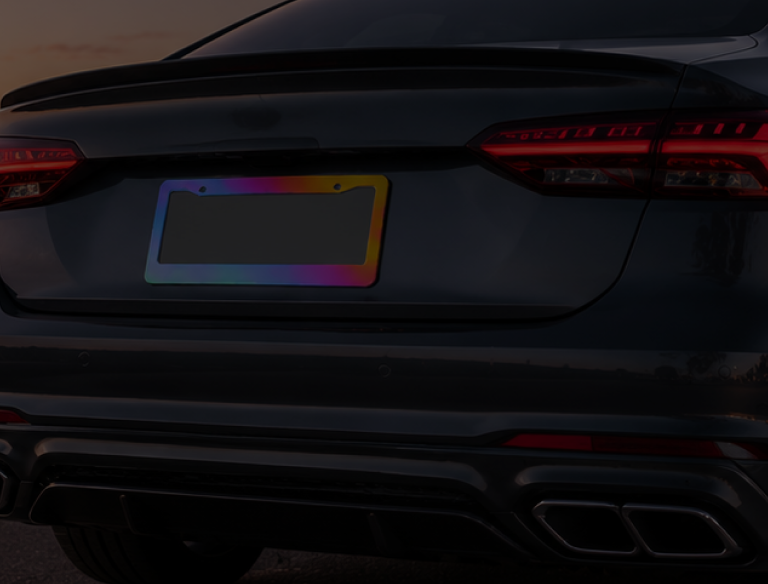
For many car owners, a license plate frame is a simple, budget-friendly way to personalize a vehicle, show support for a favorite team, or protect the car body from scratches. However, what seems like a harmless automotive accessory can quickly turn into an expensive headache.
In recent years, police departments across the United States and Canada have significantly increased enforcement of traffic laws regarding plate visibility. Thanks to the widespread use of Automated License Plate Readers (ALPRs), a frame that covers even a fraction of a millimeter of the wrong information can result in an unexpected traffic stop and a fine ranging from $50 to over $200.
If you want to keep your ride clean and legal, here is exactly what you need to look for when choosing a license plate frame.
The Golden Rule: What Makes a License Plate Frame "Illegal"?
The underlying logic of traffic laws regarding license plates is straightforward: law enforcement and traffic cameras must be able to identify your vehicle instantly without any obstruction.
When an officer reviews your license plate frame, they check for three critical compliance points:
- The "State/Province Name" Rule: In almost all jurisdictions, the name of the state (e.g., TEXAS, CALIFORNIA) or province (e.g., ONTARIO) must be completely visible. Covering the top or bottom text where the location is printed is the number one reason drivers get ticketed.
- Registration Tags and Stickers: The small decals indicating the month and year of your registration must remain fully exposed. Depending on where you live, these stickers are placed in the upper or lower corners of the plate.
- The License Plate Numbers: The primary alphanumeric characters must be entirely unobstructed from every angle.
US License Plate Frame Laws: A State-by-State Overview
License plate regulations vary by state, meaning a frame that passes without issue in one state could get you pulled over in another.
Strict Enforcement States (Zero Tolerance)
- Texas: Texas Transportation Code § 504.945 strictly prohibits any frame that alters, obscures, or covers the state name or the registration stickers. Texas law enforcement is highly active in enforcing this rule.
- California: California Vehicle Code § 5201 mandates that plates must be maintained in a condition so as to be clearly legible. Frames with thick borders that overlap the text "California" frequently lead to fix-it tickets.
- Florida & New York: Both states require all lettering and numbers on the plate to remain fully visible. Even a frame that slightly overlaps the rim of the lettering can be cited as a violation.
More Lenient States
Some states only enforce penalties if the central plate numbers or the validation stickers are blocked. However, relying on a local officer's leniency is risky, especially if you plan to drive across state lines on a road trip.
Canadian License Plate Frame Laws: Province Rules
In Canada, provincial Highway Traffic Acts are equally strict regarding plate alterations.
- Ontario: Under the Highway Traffic Act (HTA), any frame, dirt, or mounting hardware that prevents a police officer or a toll highway camera (like the 407 ETR) from clearly reading the province name or validation sticker is illegal.
- British Columbia: The Motor Vehicle Act Regulations state that a license plate must not be obscured by any frame or cover that reduces its visibility or legibility.
3 Common Traps to Avoid When Buying a Frame
When shopping for an aftermarket license plate frame, avoid these three common design flaws:
The "Thick Border" Fan or Promotional Frames
Frames provided by car dealerships or those featuring sports team logos often feature a thick, 1-inch bottom or top border. While great for text display, these borders almost always overlap the exact spots where your state name or registration tags sit.
Understanding License Plate Covers (Clear vs. Tinted)
Many drivers prefer adding a protective plastic cover over their license plate to shield it from rocks, debris, and weather damage. While clear covers are designed to keep your plate pristine, you should always check your local state or provincial guidelines before installing one.Some jurisdictions are highly sensitive to tinted, smoked, or anti-glare covers because they can alter the plate's visibility under certain lighting conditions or traffic cameras. If you want protection while staying completely safe from local tickets, choosing an ultra-clear, non-tinted shield or sticking strictly to a slimline frame is always the wisest choice.
Ignoring the 2-Hole vs. 4-Hole Configuration
If your vehicle only has mounting holes at the top, buying a loose-fitting 2-hole metal frame can cause the plate to vibrate, sag, or warp over time. This accidental sagging can tilt the plate downward, inadvertently hiding your validation tags from view.
How to Choose a 100% Street Legal Frame
You do not have to settle for an ugly, bare license plate just to stay legal. You simply need to choose a product engineered with compliance in mind.
Option 1: Look for a "Slimline" or "Narrow-Border" Design
A high-quality slimline frame features a ultra-thin bezel that only wraps around the outermost 1 to 2 millimeters of the plate’s metal edge. This ensures that 100% of the state graphics, registration stickers, and text remain fully exposed.
Option 2: Verify Your State's Tag Placement First
Before ordering, look at your current plate. Are your registration stickers in the top corners or the bottom corners? If you prefer a slightly wider frame, look for styles explicitly marketed as "Top-Open" or "Bottom-Open" to match your specific plate layout.
Option 3: Upgrade to Premium Silicone License Plate Frames
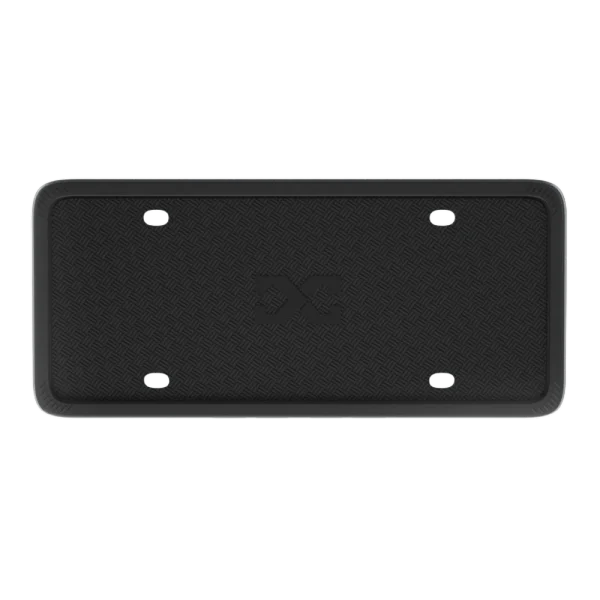
Silicone frames have become the modern industry standard for a reason. Unlike rigid metal or cheap plastic, a premium silicone license plate frame features an extremely low-profile, wraparound design that provides maximum legal clearance.
Additionally, silicone brings practical advantages that metal frames cannot match:
- Zero Rattle: The flexible material absorbs vibrations, completely eliminating the annoying buzzing sound caused by heavy bass or trunk closures.
- Paint Protection: It acts as a soft barrier, ensuring the metal edges of your license plate never scratch your vehicle’s factory paint.
- Weatherproof: It will not rust, fade, or peel when exposed to winter road salt or intense UV rays.
Quick Compliance Checklist
Before you head out on the road, take a quick look at your vehicle's rear end and run through this checklist:
- Is the entire name of your state or province fully visible?
- Are all four corners of your registration stickers completely uncovered?
- Is the frame free of any clear, tinted, or plastic protective lenses?
- Is the frame securely fastened without sagging or shaking?
If you checked all four boxes, you can drive with peace of mind knowing you are completely compliant with local traffic laws.
Ready to upgrade your ride without risking a ticket? Explore our collection of 100% street-legal, ultra-durable Slimline Metal Frames and Premium Silicone License Plate Frames designed for perfect compliance and zero rattle.
Disclaimer: While we make every effort to provide up-to-date legal overviews, traffic laws are subject to change. Always verify specific placement rules with your local DMV or ministry of transportation.